10-Point Checklist for Choosing Reef-Safe Sunscreen in the UK
Choosing sun protection for a day on the coast shouldn't need a chemistry degree, but the front of a bottle rarely tells you what you actually need to know. Filters that wash off a swimmer in Cornwall end up in the same ocean as the ones that wash off a snorkeller in the Red Sea, and several common ingredients have been linked to coral damage in laboratory studies. Here's an order of checks to run before you buy, plus a few ways to need less of the stuff in the first place.
Start at the back of the bottle
Brands spend real money on the front label. The information you need is on the back, in small print, listed by concentration. If oxybenzone or octinoxate appears in the first half of that list, it is a significant part of the formula rather than a trace.
Learn the handful of names that filters hide behind. Oxybenzone also appears as benzophenone-3. Octinoxate is ethylhexyl methoxycinnamate. Octocrylene, homosalate, ensulizole and enzacamene usually turn up under their own names. You don't need to memorise the chemistry, only the words; after two or three bottles you'll spot them at a glance.
Ingredients worth leaving on the shelf
- Oxybenzone (benzophenone-3) — one of the most widely studied filters in relation to coral, and one of the easiest to avoid.
- Octinoxate (ethylhexyl methoxycinnamate) — commonly paired with oxybenzone in high-street formulas.
- Octocrylene and homosalate — frequently used to stabilise or boost other filters; both are under scrutiny for environmental reasons.
- Parabens — look for methylparaben, butylparaben and propylparaben on the preservative line.
- Microplastics — polyethylene, nylon-12 and similar polymer powders added for texture. They don't dissolve and they don't belong in the sea.
- Plastic glitter and heavy fragrance — glitter is often literally plastic, and strong perfume is a common skin irritant on a hot day.
None of this means a chemical filter will ruin a reef on its own. It means that when a mineral option does the job well enough, there's no reason to add the risk.
What "reef-safe" and "ocean-friendly" actually mean
In the UK, not very much. These are not regulated terms and there is no single body certifying them, so a bottle decorated with a turtle can still list octocrylene third. Some destinations have taken their own approach: Hawaii restricts the sale of sunscreens containing oxybenzone and octinoxate, and various marine parks and island nations have similar rules for visitors. If you're travelling, check the local position before you pack.
Two phrases do carry weight. Non-nano means the mineral particles are larger than the size at which they can be taken up by small marine organisms — the usual benchmark is above 100 nanometres. Water resistant is tested to a standard rather than invented by a marketing team, and it matters more than most shoppers realise.
The 10-point checklist
- Read the INCI list before the front of the bottle, and put the tube back if a filter from the list above appears near the top.
- Choose a mineral filter — non-nano zinc oxide or titanium dioxide — as the active ingredient. If the words "non-nano" aren't there, assume they don't apply.
- Treat "reef-safe" as decoration. It is not a certification, and nobody polices it.
- For swimming, insist on water resistance. A cream that stays on your skin is a cream that isn't drifting through the shallows.
- Pick cream or a stick over an aerosol. Overspray lands on sand, rock pools and towels. If you do use a spray, apply it well away from the water and out of the wind.
- Look past the filters. Parabens, microplastic powders and plastic glitter all arrive in the sea with the sunscreen.
- Consider the packaging too. A larger pump bottle or a refillable tin uses far less plastic per swim than foil sachets and travel minis.
- Apply fifteen to twenty minutes before you get in. It binds to skin better and washes off more slowly.
- Reapply after towelling off, not before, and use enough. A thin smear of a good product is still under-protection.
- Reduce what you need in the first place. A long-sleeved rash vest, a hat and shade between eleven and three will do more for the reef, and for your skin, than any label.
Kit that works for swimmers, divers and snorkellers
A rash vest rated UPF 50+ covers more skin than most people manage to sunscreen properly, and it doesn't need reapplying. Add swim leggings for long sessions in the water and you'll cut the surface area you're protecting to your face, neck, ears and hands.
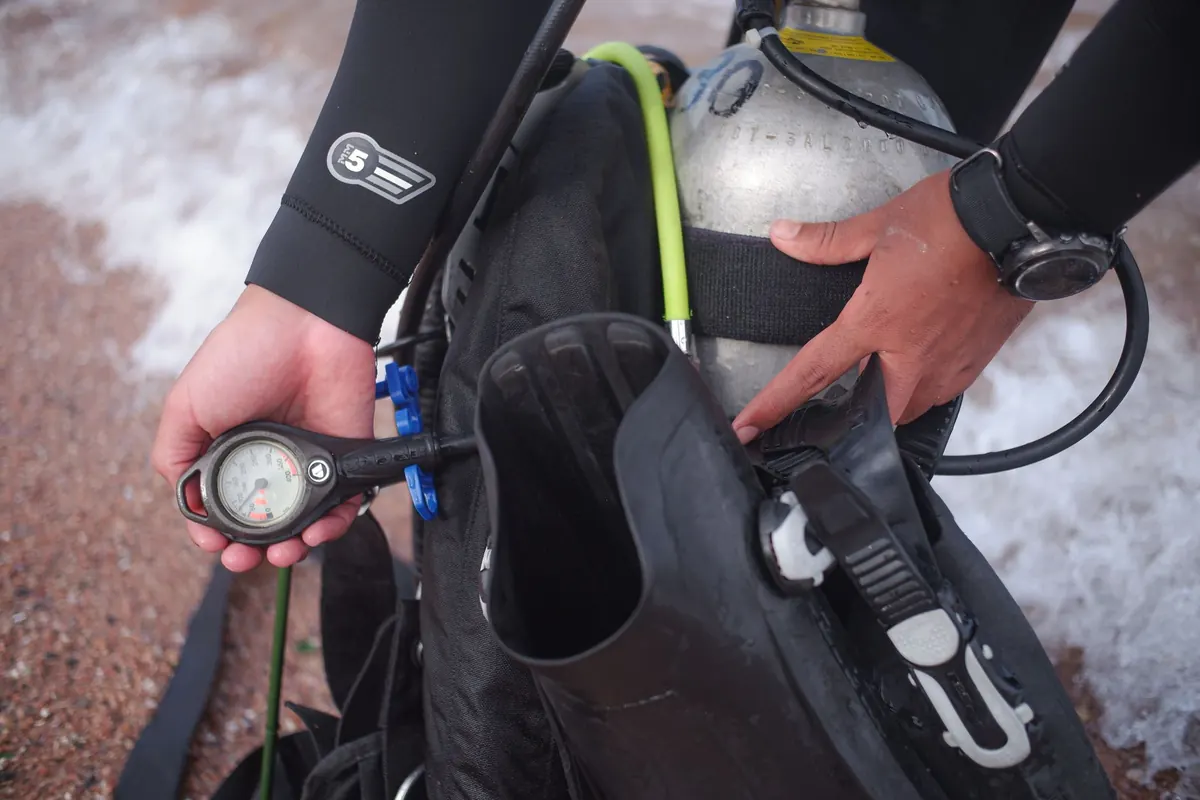
Divers have it easiest of all: the wetsuit does most of the work, so a small tube lasts an entire trip. A zinc stick on the nose and cheekbones holds up through a long surface swim where a cream would be long gone.
Keep a dedicated beach tube in your kit bag so you're not borrowing a chemical formula from someone on the boat. And use whatever you choose properly — under-applied sunscreen is under-protection whatever the filter inside it.
Before you next get in the water
Sunscreen is one small lever. Runoff, warming water and overfishing are far bigger pressures on reefs, and no shopping decision will fix those. But this is a lever you control every time you swim, and changing it takes one trip to the shops.
Don't skip sun protection to protect the reef. The trade isn't worth it. If you have a skin condition, take medication that affects sun sensitivity, or you're pregnant, speak to a pharmacist or GP about what suits you before you travel. Then cover up, choose a mineral filter, and enjoy the water.
Photo: Tara Winstead / Pexels