Sustainable Seafood in the UK: A Beginner's Guide to Ratings and Seasonal Choices
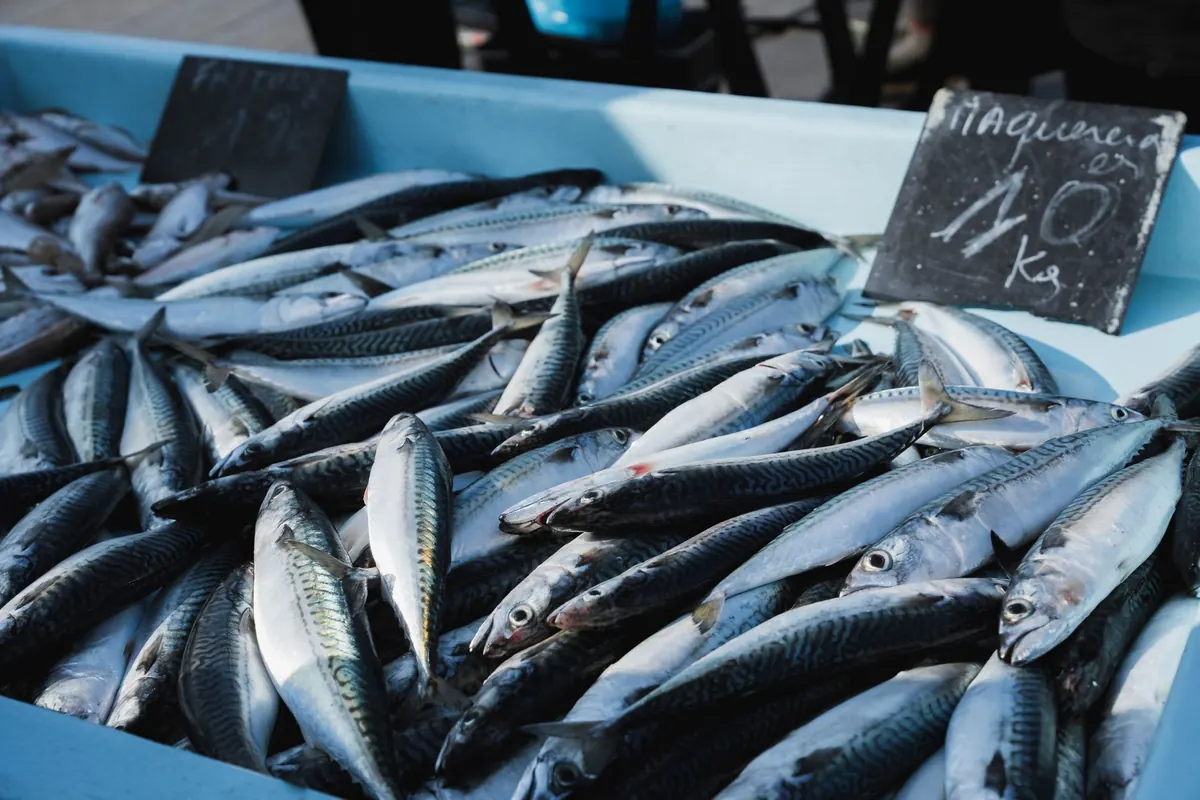
A fish counter can be an intimidating place. Rows of crushed ice, handwritten labels, a queue forming behind you and a price that seems to move with the weather. Add a question about sustainability and it is tempting to grab the smoked salmon and move on. You do not need a marine biology degree to make better choices, though. A handful of ratings, a rough feel for the seasons and two or three well-aimed questions will carry you most of the way.
What "sustainable" actually means
Sustainable seafood is fish and shellfish that can be caught or farmed now without damaging the stock's ability to recover, and without wrecking the habitat and other species around it. Three things matter most: the health of the stock, the method used to catch or farm it, and the quality of the management in place.
That is why a single word like "cod" or "prawn" tells you almost nothing. A plentiful species caught with gear that sweeps up everything in its path is not a good choice. A depleted one caught by hand-line is still not a good choice. Ratings work because they look at the combination, not just the species.
How to read a sustainability rating
There are two systems worth knowing: labels printed on the packet, and guides you check yourself before you shop.
Labels on the packet
- MSC blue fish tick — wild-caught seafood certified against the Marine Stewardship Council's standard. Look for the tick plus a certificate number.
- ASC — the Aquaculture Stewardship Council's standard for farmed fish and shellfish.
- RSPCA Assured — a welfare standard, mostly for farmed fish. It says something about how the animal was raised, not about the health of wild stocks.
- Organic certification (for example Soil Association) — applies mainly to farmed species and restricts some feeds and chemicals.
These labels are not interchangeable. MSC and ASC assess environmental impact. Welfare schemes assess how the animal was kept. A packet can carry more than one, and often does.
The Good Fish Guide
The Marine Conservation Society's Good Fish Guide is the most useful free tool for UK shoppers. It rates species and specific fisheries from 1 to 5, with 1 and 2 in green as the better choices, 3 in amber for occasional eating, and 4 and 5 in red as ones to avoid. The crucial detail is that the rating belongs to the fishery, not the species. The same fish landed by a different method or from a different sea can sit at the opposite end of the scale, so look for origin and catching method, not just the name on the label.
Farmed, wild and the honest grey areas
Neither farmed nor wild is automatically the better option. It depends entirely on the species and the operation.
- Mussels, oysters and clams — farmed bivalves are among the lowest-impact seafood you can buy. They filter the water around them and need no feed.
- Farmed salmon — look for ASC or organic certification, and ask what the fish are fed. Feed made from wild-caught fish and the siting of pens are the main concerns.
- Warm-water prawns — farming has historically been linked to the clearance of coastal mangroves, so certification matters here more than almost anywhere.
- Scallops, crab and lobster — hand-dived scallops and pot-caught crab or lobster generally cause far less seabed disturbance than dredged or trawled equivalents.
- Cod and haddock — some North Atlantic fisheries are well managed and certified; others are not. Check the guide rather than assuming.
Eating with the seasons
UK waters change through the year, and so does what is at its best. Buying with that rhythm tends to mean fresher fish, better value and less pressure on any single stock.
A rough UK calendar
- Spring — crab, cockles, pollock, lemon sole; native oysters come to the end of their season.
- Summer — mackerel, sardines and pilchards, lobster, crab, squid and sea bass. Farmed mussels are good year-round.
- Autumn — herring arrives, mackerel is still plentiful, native oysters return and scallop fishing picks up.
- Winter — mussels, oysters, scallops, hake and coley, with cod and haddock at their most dependable.
The old "only eat shellfish in months with an r" rule still holds for wild native oysters, which are left alone from roughly May to August while they spawn. Farmed Pacific oysters and rope-grown mussels are sold all year and are a sound choice in any month.
If you are unsure what to buy, the underused species are usually the safest bet: gurnard, coley, hake, whiting, sardines and mussels are all excellent eating and far less pressured than the famous names.
Questions worth asking
At a market stall or a restaurant, a short, friendly question does more than any label. Try these:
- Where was this caught or farmed? "UK waters" is not an answer — the sea area matters.
- How was it caught? Line, pot, hand-dive, trawl or dredge all mean different things for the seabed and for bycatch.
- Is it in season? A good fishmonger will tell you honestly if something is at the end of its run.
- What would you buy today? This is the most useful question of all, and most staff enjoy answering it.
- If it is farmed, what is it fed? Especially worth asking about salmon and prawns.
You will not always get a straight answer. A shrug is information too. A fishmonger who can name the boat or the farm is worth going back to, even if the queue is longer.
Starting where you are
You do not need to overhaul your shopping in one go. Pick one change and see how it sits. Swap cod for coley or hake in a fish pie. Buy a bag of mussels instead of prawns for a midweek dinner. Ask the origin question once, at the counter you use most, and notice how the answer shapes what you buy next time.
Keeping a short note on your phone of the three or four species you buy most, with their Good Fish Guide ratings, takes ten minutes and saves a lot of dithering later. Traceability is a good proxy for care: if you can find out where your fish came from, someone along the chain is paying attention.
None of this has to be absolute. A perfect record is not the point, and a single imported prawn will not undo a year of thoughtful buying. If most of your seafood is green-rated, in season and traceable, you are already ahead of the average trolley.
For guidance on how much and which types of fish to eat, particularly if you are pregnant, breastfeeding or cooking for young children, check NHS advice or speak to your GP, midwife or health visitor.
Photo: Nadine Ginzel / Pexels