How to Identify UK Cetaceans from Shore: A Practical Guide to Whales, Dolphins and Porpoises
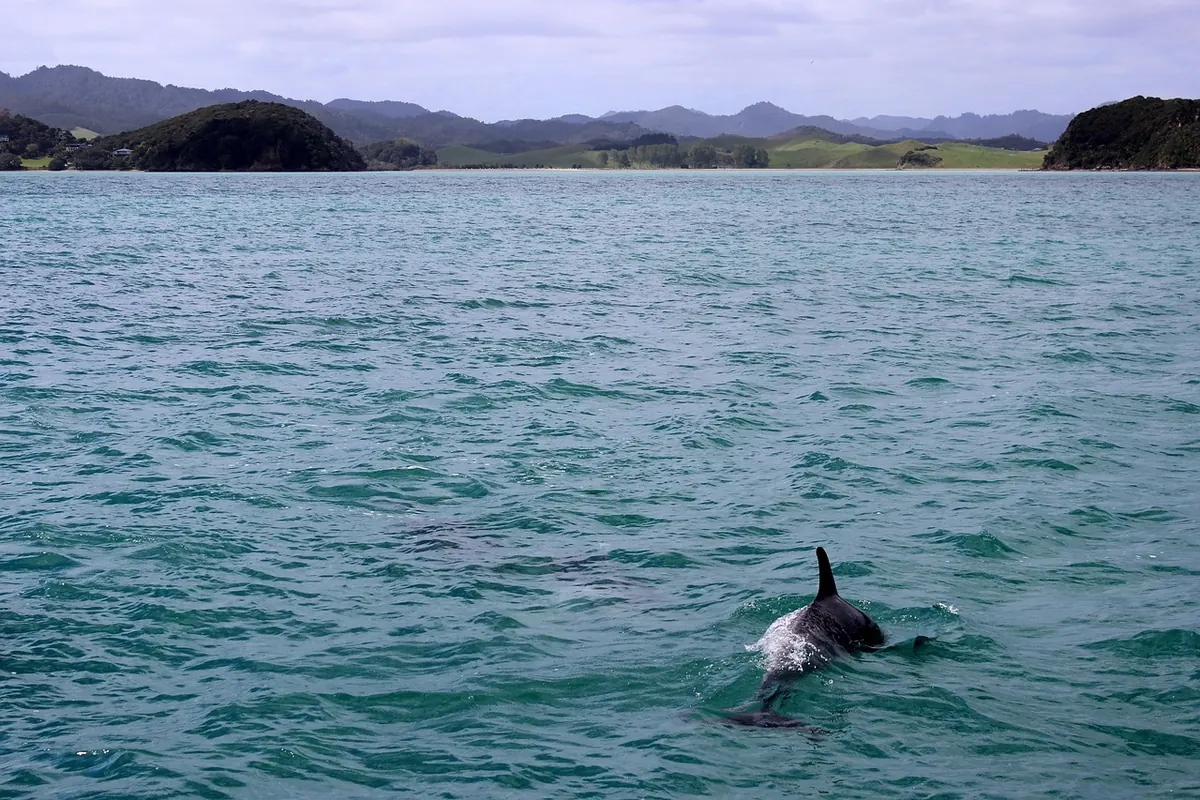
The UK coastline is far richer in cetaceans than most people realise. You do not need a boat, a research permit or a lucky break on a wildlife cruise. With calm conditions, a decent pair of binoculars and a little patience, a headland or beach can become a front-row seat. The trick is knowing when to look, what to look for and how to record it.
Choose your conditions before you choose your spot
Cetaceans are always out there, but they are only visible when the sea allows it. Flat, glassy water is ideal. A light offshore breeze can help, keeping the surface smooth and carrying the sound of a blow towards you. Strong onshore winds, heavy swell and wind-over-tide chop make fins almost impossible to pick out.
Check the forecast for wind speed and swell height, not just sunshine. A high-pressure day with visibility of several kilometres is far better than a bright but hazy one. Early morning and late afternoon often give the best light; midday sun can turn the sea into a sheet of glare. Polarised sunglasses will cut much of that glare and help you see below the surface. A rising tide often brings fish closer to shore, and feeding dolphins may follow, but that is a general pattern, not a promise.
Reading the sea: the clues that give cetaceans away
Scan slowly. Sweep the horizon from left to right with your naked eye, then repeat with binoculars. Do not stare at one patch of water; cetaceans surface briefly and move. Look for these clues:
- Blows: A puff of mist that appears and vanishes in a second. Minke whales have a small, quiet blow; humpbacks can produce a bushy, taller plume. Note the direction and wait for the next surfacing.
- Dorsal fins: The most common clue. Harbour porpoises show a small, triangular fin and a dark back. Bottlenose dolphins have a curved, hooked fin. Orcas carry a tall, unmistakable black fin.
- Splashes and white water: Leaping dolphins, tail-slapping humpbacks and feeding groups can be seen from kilometres away. A sudden patch of white in an otherwise grey sea is worth a second look.
- Birds: Diving gannets, rafts of Manx shearwaters or gulls circling low often mean fish near the surface. Where fish gather, dolphins and whales may follow.
- Feeding slicks and calm patches: Oil from fish and plankton can flatten the water. A suspiciously smooth patch can mark a productive area.
Keep a fixed reference point, such as a headland or lighthouse, so you can describe where the animal was and track its direction. If you lose it, do not chase it along the coast; wait and scan the same area again.
Meet the regulars: species you can hope to see
The species you are most likely to see depends on where you are. The west coast of Scotland, the Hebrides, Cornwall, Pembrokeshire and the Moray Firth are particular hotspots, but cetaceans turn up all around the UK.
Harbour porpoise
The smallest and most frequently seen cetacean in UK waters. Look for a dark, rounded back and a small triangular fin. There is no beak. They often surface with a quick roll, showing little more than the fin and a glimpse of the back. Quiet, coastal and easily missed unless the sea is calm.
Bottlenose dolphin
Large, robust and grey, with a short beak and a curved dorsal fin. They are famous in the Moray Firth and Cardigan Bay, but coastal groups occur elsewhere. They can be acrobatic, breaching and tail-slapping, and often travel in small groups close to shore.
Common dolphin
More offshore, but regularly seen from headlands in the south-west and west. The cream or yellow patch along the side, forming an hourglass pattern, is the giveaway. They are fast, active and often in large pods, with plenty of leaping and splashing.
Risso's dolphin
A big, grey dolphin with a blunt head, no beak and a tall, curved fin. Adults are often heavily scarred and pale. They can be curious and active at the surface, and are most often seen in deeper water off the west and north.
Minke whale
A small baleen whale, usually seen alone or in pairs. Look for a pointed head, a small curved fin set far back and a faint blow. They often surface several times in a row, then dive for a few minutes. Common around Scotland and the Irish Sea in summer.
Humpback whale and orca
Humpbacks are increasingly reported around the UK, especially in the north and west. A bushy blow, long white flippers, a breaching body or a raised tail fluke are the classic signs. Orcas are mostly seen around Shetland, Orkney and the Hebrides. The tall dorsal fin of a male and the black-and-white pattern are unmistakable. Do not confuse a basking shark with a whale: it has a huge dorsal fin, a pointed snout and a tail that breaks the surface, but it is a fish, not a cetacean.
Kit and technique for a long watch
A long watch is easier with the right kit and a comfortable routine.
- Binoculars: 7x50 or 8x42 are a good balance of brightness and field of view. Higher magnification is hard to hold steady on a moving sea.
- Spotting scope and tripod: Useful on a headland, but practise finding the animal with binoculars first, then switch.
- Polarised sunglasses: They reduce glare and help you see beneath the surface.
- Layers and waterproofs: Coastal weather changes quickly, even in summer.
- Notebook or phone: Record time, location, species, number and behaviour while it is fresh.
- Flask and snacks: Patience is the main skill. Comfort helps.
Scan with purpose but take breaks. Staring at the sea for an hour without blinking will tire your eyes. Use the horizon as a line, sweep slowly, and let your peripheral vision do some of the work. If others are with you, split the view into sections and share what you see.
Report what you see
Every sighting matters. Records help conservationists track populations, identify important areas and argue for protection. National schemes such as the Sea Watch Foundation collect public sightings, and local wildlife trusts and regional groups often do the same. Report even if you are not certain of the species; a description and photo can still be useful.
- Note the date, time and exact location. A grid reference, what3words or a clear landmark helps.
- Record the number of animals, including any calves, and their behaviour: travelling, feeding, breaching or resting.
- Describe the sea state, wind and visibility, so others can judge how reliable the sighting was.
- Add direction of travel and any photos or video, even if distant or blurry.
- Send it to a recognised recording scheme as soon as you can.
If you find a live stranded cetacean, do not push it back into the sea. Keep people and dogs away, keep noise down and contact the coastguard and British Divers Marine Life Rescue. For a dead animal, report it to the Cetacean Strandings Investigation Programme. These organisations are equipped to help and to collect valuable scientific information.
Make it a habit
Shore-based cetacean watching rewards repetition. The same headland on a calm morning in July can be empty one day and full of porpoises the next. Go often, note the conditions and build your own picture of what works. Share your sightings, however modest. A single harbour porpoise rolling through a glassy swell is a genuine wildlife encounter, and the records you keep help protect the animals that made it possible.
Photo: Ildigo / Pixabay